In growing parcel networks, DPD Recruitment highlights immediate openings for delivery drivers and warehouse operatives.
Early preparation smooths screening, accelerates onboarding, and reduces delays during route assignment or shift placement.
Candidate profiles vary, although customer focus, physical readiness, and punctuality keep showing up in successful applications.
What DPD Recruitment Covers In 2026
Across many markets, DPD fills two core pipelines, road-based delivery and depot-based operations.
Delivery roles include employed drivers and self-employed contractor routes through DPD’s delivery partners. Depot roles focus on sorting, scanning, loading, and dispatch accuracy across rotating shifts.
Hiring runs year round because parcel volumes remain elevated in e-commerce heavy regions, especially during seasonal peaks and promotional periods.
Driver Roles: Work, Requirements, Pay
Hiring teams prioritize safety, scan accuracy, and reliable customer interaction for driver routes.
Expect an early start, a pre-sorted manifest, and a scanning workflow that maintains chain of custody. Digital tools handle navigation, proof of delivery, and exception reporting without improvisation.
Work Routine
Typical shifts begin near 6:00 a.m., when drivers collect parcels, load vans in planned sequence, and head out on assigned routes.
Daily stops often land around 120 to 150 deliveries depending on geography, traffic, and density. Handheld devices guide turn-by-turn navigation, capture signatures when needed, and record outcomes for every parcel.
Eligibility
Regions commonly expect candidates to be at least twenty one years of age, hold a valid class B or equivalent driving license, and pass right to work checks.
Some partners ask for a certificate of good conduct or equivalent document. Physical readiness matters because repetitive lifting and on-foot delivery increase fatigue without correct technique.
Vehicle and Van Requirements
Self-employed contractors may need their own van, typically between 600 kilograms and 2000 kilograms capacity, maintained to local roadworthiness standards.
Certain countries reference additional regulatory items, for example RUTA or LINTI, where applicable.
Employed routes can include a company van plus insurance and fuel, which simplifies operating costs for new starters.
Pay and Benefits
Compensation varies by market and employment status. In the United Kingdom, employed delivery drivers often see base salaries near twenty six thousand pounds per year, with typical ranges between twenty four thousand and thirty three thousand pounds.
Self-employed drivers can generate route revenues that reach fifty to sixty thousand pounds annually, while taking responsibility for taxes, vehicle costs, and insurance.
Internationally, a courier in Rotterdam may see around three thousand euros net each month, while a Polish warehouse worker might earn about 30.5 PLN per hour gross, with uplift for night shifts. Many employed roles include paid training, uniform, and health and safety support, plus local leave entitlements.
Warehouse Shifts and Core Tasks
Depot operations keep the network moving as parcels transition between trailers, belts, cages, and vans.
Schedules rotate across day, afternoon, and night shifts, often spanning seven days in larger hubs. Hiring focuses on accuracy under time pressure, safe lifting, and consistent attendance.
Shifts and Scheduling
Rotas can include fixed nights, mixed rotations, or weekend heavy patterns during peak.
Managers brief teams at shift start, confirm safety topics, and assign lines or zones for that window. Attendance and punctuality drive reliability scores that influence future shift preferences.
Physical Demands
Sorting includes unloading inbound trailers, scanning parcels, and staging outbound cages for vans.
Repetitive handling up to thirty kilograms appears in many postings, although teams use aids such as pallet jacks and conveyors. Correct lifting posture reduces strain, and trainers intervene quickly when technique slips.
Safety and Training
New hires receive depot walk-throughs, scanner training, and incident reporting steps.
Supervisors emphasize housekeeping standards, near miss reporting, and personal protective equipment. Refresher sessions reinforce belt safety, trailer docking rules, and pinch point awareness.
How To Apply For DPD Driver and Warehouse Roles
Hiring paths differ slightly for employed drivers, self-employed partners, and depot staff. A simple plan helps avoid missed fields or duplicate submissions.
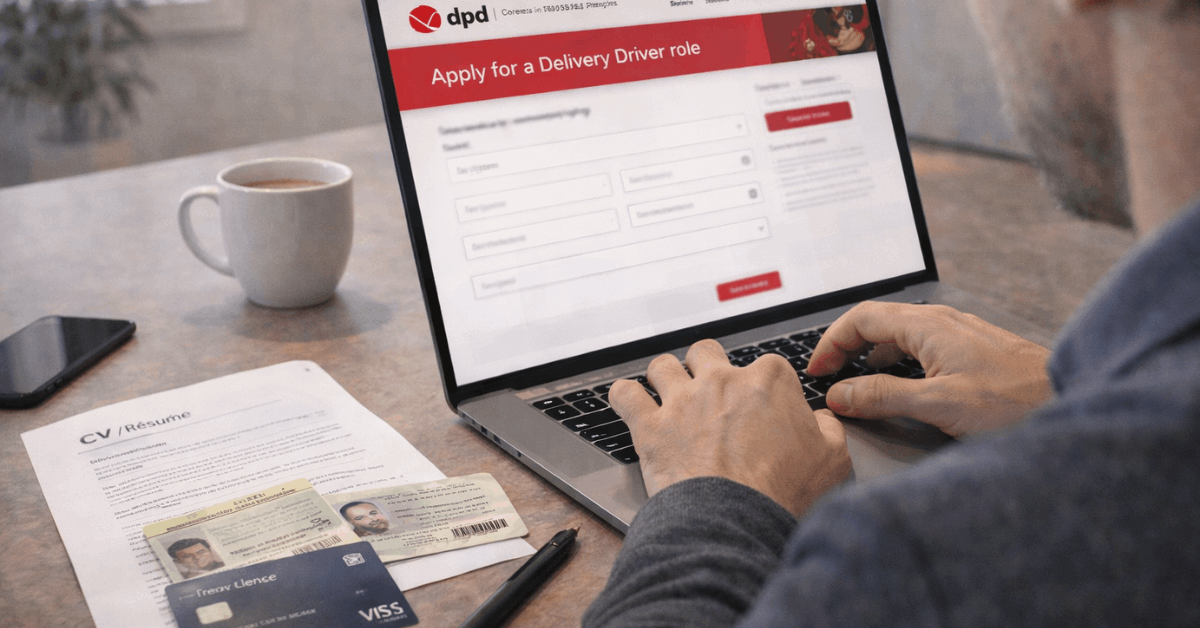
- Use the DPD online job finder to locate live vacancies and submit an application that aligns with your region and eligibility.
- Send an unsolicited application when no suitable posting appears, since many depots maintain rolling shortlists.
- Complete the Delivery Partner form to join a self employed courier DPD route through contractual partners in relevant areas.
- Prepare documents in advance, including a valid license, right-to-work proof, background certificate where required, and van paperwork if contracting.
- Attend interviews or assessment sessions, confirm shift availability, and complete onboarding, which typically includes training on scanners and safe loading.
Employment Models and What They Mean
DPD operates a mixed model that blends direct employment and partner-led contracting. Employed drivers receive a fixed wage, structured benefits, and a company van in many markets.
Contractors operate as business owners, invoice for route revenues, manage vehicle upkeep, and handle tax and insurance obligations according to local law.
Either path can work, although contractors should budget for maintenance, tires, fuel, and seasonal downtime. Employed drivers often prefer predictable income and provided equipment, while contractors value flexibility and revenue upside on dense routes.
Day-One Tools and Systems
Scanning drives parcel visibility, so handheld devices remain central during both loading and delivery.
Drivers load in sequence to minimize re-sorting in neighborhoods and cul-de-sacs. Proof of delivery types vary, signature capture, photo at safe place, or coded handoff for attended business addresses.
Depot teams work on belt controllers, label printers, and dock management screens, which makes scanner literacy helpful for applicants moving between floor roles and lead positions.
Career Growth, Culture, and Safety
DPD cites four pillars that guide internal development, diversity, equity and inclusion, talent management, internal careers, and health, safety, and wellbeing.
Depots benefit when supervisors promote cross-training and rotation across lines, cages, and dispatch.
New joiners typically receive welcome packs and structured induction plans that map essential skills for the first weeks.
Training and Mentorship
Induction starts on day one, covering scanners, safe lifting, and shift routines. Mentors shadow new team members on early shifts, correct habits, and escalate questions to supervisors.
Drivers receive route coaching on sequence, safe reversing, and exception handling.
Internal Careers
High performers step into lead roles, quality control, health and safety representation, or dispatch coordination. Internal job boards surface vacancies across depots, allowing lateral moves that match personal circumstances and commute patterns.
Health, Safety, and Wellbeing
Managers review near misses, manual handling, and fatigue risks in regular briefings. Long routes, night shifts, and heavy sort volumes require planned breaks and hydration.
Access to occupational health resources varies by market, although supervisors escalate promptly when incidents occur.
Inclusion and Culture
Many depots underline open and inclusive culture commitments. Couriers represent the brand in neighborhoods and business parks, so teams value polite, professional interaction.
Recognition programs highlight attendance, scan accuracy, and on-time performance.
Quick Comparison: Driver Vs Warehouse
A simple side-by-side helps applicants match strengths to role demands.
| Aspect | Delivery Driver | Warehouse Operative |
| Start Times | Early mornings around six a.m. | Rotating shifts including nights |
| Core Tasks | Load sequence, deliver 120–150 stops, scan outcomes | Unload, scan, sort, stage outbound cages |
| Typical Hours | Nine to ten hours, five days including weekends | Variable shift lengths across seven-day coverage |
| Physical Demands | Repetitive lifting, walking, stairs, vehicle ingress | Repetitive lifting to thirty kilograms, line pace |
| Earnings Notes | Employed salaries or contractor route revenues | Hourly rates with shift differentials for nights |
Application Tips That Improve Response Times
A few practical adjustments can shorten hiring timelines and lift selection odds.
- Match experience to posted requirements, for example scanner use, manual handling, or customer contact.
- State vehicle ownership clearly when applying for partner routes, including capacity, year, and maintenance status.
- Indicate shift flexibility for depots, since nights and weekends fill first during peaks.
- List clean driving history details, plus any safety or first aid training certificates.
- Keep references reachable during business hours to avoid scheduling delays.

Sustainability and Responsibility Signals
DPD highlights responsibility programs that include carbon-neutral parcel shipping and social commitment initiatives under the DrivingChange sustainability strategy.
Applicants who value emissions reduction, efficient routing, and community engagement find alignment in these themes.
Depot roles increasingly track waste separation and energy use, while driver routes gain efficiency through compact sequences and modern equipment.
What To Expect After Submitting An Application
Recruiters typically confirm receipt, then request documents that verify identity, license status, and right to work. Background checks occur according to local law, which can extend timelines in certain jurisdictions.
Training slots follow quickly once screening clears. Drivers should plan a vehicle inspection if operating as a contractor, while employed drivers receive handover for a company van.
Warehouse hires collect safety gear, complete walk-throughs, and join a buddy system on early shifts.
Who Thrives In These Roles
Applicants who enjoy driving, direct customer contact, and route discipline tend to thrive as drivers. Candidates who prefer team environments, machine pacing, and process control fit warehouse roles.
Both tracks reward punctuality, safety focus, and calm communication during exceptions. Strong performers maintain scan accuracy, protect customer property, and escalate issues instead of improvising workarounds.
How DPD Supports New Colleagues
Many locations provide welcome packs, structured induction, and interactive depot tours. Staff rotation across departments broadens skills and reduces monotony, which helps retention.
Events throughout the year build team connection and surface process feedback that improves throughput and safety outcomes. These practices reduce ramp-up time for new starters and strengthen bench depth for peak periods.
Final Takeaway
DPD Recruitment in 2026 centers on two proven pathways, road delivery and depot operations. Clear eligibility, document readiness, and role fit speed up offers, training slots, and first shifts.
Self-employed contractor routes reward business-minded drivers who manage vehicles and costs, while employed roles emphasize predictable income and provided equipment.
Warehouse positions suit candidates who enjoy fast, precise work across scanning and sorting. Prepared candidates move faster, perform better, and open doors to internal careers as volumes continue rising.