
The world of skilled trades forms the backbone of essential services in any modern society, and Czechia is no different. Among these trades, electricians play a central role in keeping homes, businesses, factories, and public infrastructure safe and functional.
This article explores the role of electricians in Czechia, including their main duties, required training, safety responsibilities, specialization paths, legal regulations, and modern industry trends.



It also highlights why this profession remains important as the country continues to develop its construction sector, energy systems, and smart technology infrastructure.
Why Electricians Are Essential in Czech Skilled Trades
Electricians in Czechia are responsible for installing, maintaining, repairing, and upgrading electrical systems. Their work supports residential, commercial, and industrial spaces, making sure people have safe and reliable access to electricity.
Their role combines hands-on ability with technical knowledge. As buildings become more advanced and energy systems become more digital, electricians must continue adapting to new tools, codes, and technologies.
Main Duties of Electricians in Czechia
Electricians handle a wide range of tasks depending on the project, work environment, and level of specialization. Their responsibilities often include installation, maintenance, troubleshooting, safety checks, and technical documentation.
Installing Electrical Systems
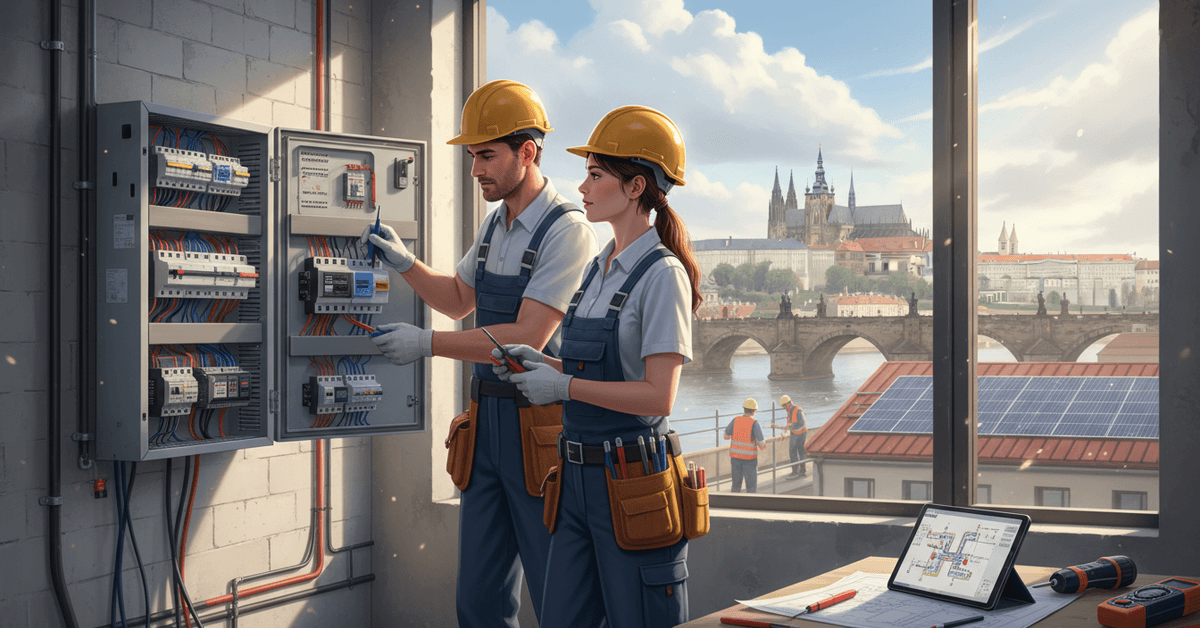
One of the main duties of electricians is installing electrical systems in new or renovated buildings. This work requires careful planning, accuracy, and compliance with safety rules.
Typical installation tasks include:
- Planning wiring layouts
- Mounting conduits
- Pulling cables through walls
- Connecting switches and sockets
- Installing circuit breakers
- Setting up lighting fixtures
- Testing systems before use
Each installation must match both the client’s needs and applicable safety standards. A properly installed system helps reduce risks and supports long-term building performance.
Maintenance and Troubleshooting
Routine maintenance is another important part of the profession. Electricians inspect systems, identify problems, and repair faults before they become serious hazards.
Common issues electricians may handle include:
- Flickering lights
- Tripped circuit breakers
- Faulty sockets
- Malfunctioning appliances
- Unstable electrical connections
- Overloaded circuits
To solve these problems, electricians often use diagnostic tools and testing equipment. Their work helps keep homes, businesses, and industrial facilities running safely.
Electrical Safety and Professional Standards
Safety is one of the most important parts of electrical work. Since electricians often work with live currents, complex systems, and sensitive equipment, strict safety procedures are necessary.
National and European Safety Standards
Modern Czech electricians must understand both national and European safety standards. These rules guide how electrical work should be performed, inspected, and documented.
Electricians must stay updated because technology continues to change. Digital systems, smart devices, and energy management tools have made electrical work more complex than before.
Ongoing Training and Certification
Continuous professional development helps electricians maintain their skills and follow legal requirements. Training may include updated safety procedures, new installation methods, and the use of modern diagnostic tools.
Important areas of ongoing training often include:
- Risk reduction
- Personal protective equipment
- Emergency response protocols
- Updated electrical codes
- Smart system installation
- Remote monitoring tools
This focus on safety protects both workers and the public.
Collaboration With Other Construction Professionals
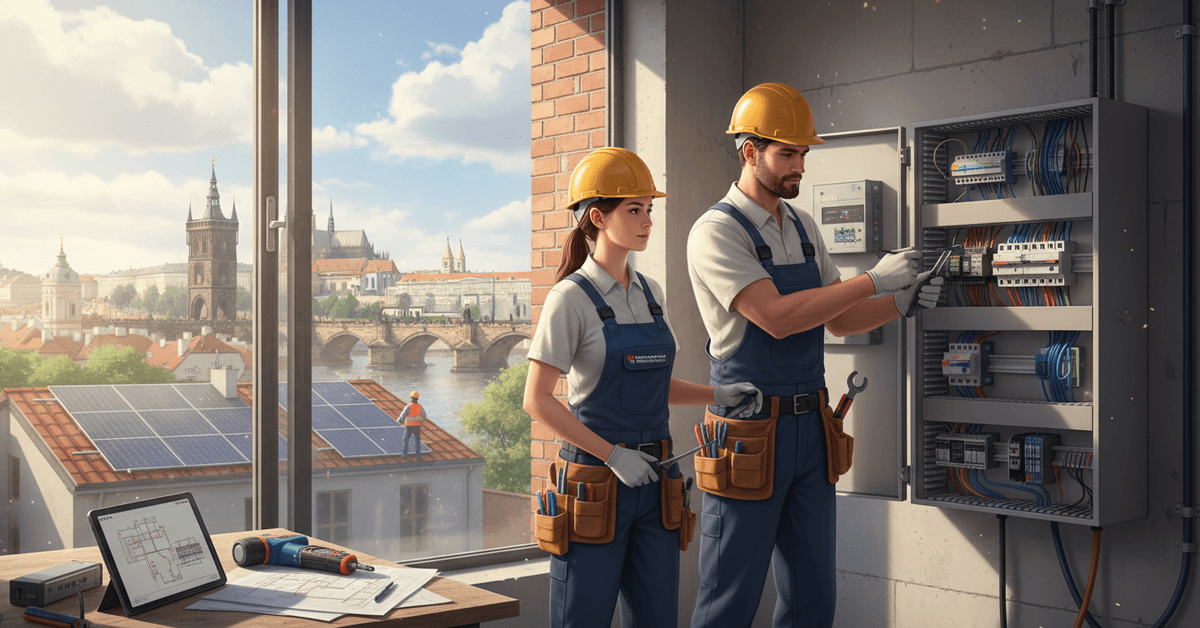
Electricians often work closely with other professionals on construction and renovation projects. Their work must fit smoothly into the overall building plan.
Common Professional Collaborations
Electricians may coordinate with:
- Architects
- Engineers
- Plumbers
- HVAC specialists
- Construction managers
- Security system installers
This collaboration ensures that electrical systems support the full operation of a building. For example, electrical planning may need to align with heating systems, ventilation units, lighting controls, or security devices.
Education and Training Requirements
The educational path for electricians in Czechia usually begins with secondary vocational education or apprenticeship training. These programs combine classroom learning with supervised practical experience.
What Electrician Training Usually Covers
Training programs often include:
- Circuit theory
- Electrical safety
- Blueprint reading
- Tool operation
- Wiring methods
- Installation procedures
- Maintenance practices
- Troubleshooting techniques
This mix of theory and practice helps students build the technical foundation needed for real-world work.
Certification and Examinations
After completing vocational training or an apprenticeship, many graduates pursue certification. This may involve both written exams and practical assessments administered by authorized Czech bodies.
A typical path may include:
- Completing vocational education or apprenticeship training
- Gaining supervised practical experience
- Studying national safety standards
- Passing written and hands-on examinations
- Maintaining qualifications through further training
Certification helps confirm that an electrician is qualified to perform electrical work safely and legally.
Specialization Paths for Electricians
Electricians in Czechia can choose several career paths depending on their interests, skills, and work environment. Specialization can also create opportunities for higher responsibility and more advanced technical work.
High-Voltage Systems
Some electricians specialize in high-voltage systems. These professionals may work in industrial plants, power facilities, or transmission infrastructure.
This type of work requires strong technical knowledge and strict attention to safety. High-voltage environments are more complex and usually demand advanced training.
Renewable Energy Technologies
Renewable energy is becoming increasingly relevant as Czechia pursues sustainability initiatives. Electricians with knowledge of solar, wind, and energy-efficient systems may find growing opportunities in this area.
Renewable energy work may include:
- Solar panel installation
- Wind turbine electrical systems
- Energy storage connections
- Grid-related upgrades
- System monitoring and maintenance
This specialization connects traditional electrical skills with newer environmental goals.
Building Automation and Smart Systems
Many electricians are also moving into building automation. These professionals install and maintain smart systems that control lighting, temperature, access, and security.
Building automation is increasingly requested in:
- Commercial properties
- Modern offices
- Luxury homes
- Industrial facilities
- Energy-efficient buildings
This area requires both electrical knowledge and familiarity with software-driven systems.
Legal Regulations in Czechia
Electrical work in Czechia is regulated to protect public safety. Laws define who can perform electrical work, what certifications are required, and under what conditions certain tasks may be completed.
Why Credentials Matter
Working without proper credentials can create serious risks. Poor electrical work may lead to system failures, fire hazards, injuries, or legal penalties.
Proper certification helps ensure that electricians understand:
- Safety rules
- Technical procedures
- Inspection requirements
- Legal responsibilities
- Documentation standards
The Czech Labour Inspectorate enforces these standards and helps ensure compliance within the industry.
Documentation and Communication
Electricians do more than physical installation and repair. Documentation is also a regular part of the job, especially for larger projects, inspections, and insurance-related matters.
Common Electrical Documents
Electricians may prepare:
- Technical reports
- Inspection notes
- Fault analysis records
- Compliance documents
- Repair summaries
- Service recommendations
These records can be important for clients, government inspectors, construction teams, and insurance companies.
Clear communication also matters because electricians often need to explain problems, risks, and repair options in a practical way.
Technology and Modern Industry Trends
Technology is changing the electrical trade in Czechia. Electricians today often work with systems that are more digital, connected, and software-based than in the past.
Digital Systems and Smart Metering
Modern electrical work may involve smart meters, energy management platforms, and remote monitoring tools. These systems allow better tracking of energy usage and performance.
Electricians may need IT literacy to install, configure, or troubleshoot these components. This makes the profession more technical and creates demand for updated skills.
Growing Demand for Skilled Electricians
The need for electricians remains strong due to construction activity, infrastructure upgrades, and the transition toward greener energy systems. Demand exists in both urban and rural settings.
Electricians may find work with:
- Construction companies
- Electrical contracting firms
- Manufacturing plants
- Government agencies
- Industrial facilities
- Private service businesses
Experienced professionals may also start their own businesses and serve specialized markets.
Apprenticeships and Career Entry
Apprenticeships are especially valuable for people entering the electrical trade. They allow students and new workers to learn directly from experienced professionals.
Benefits of Apprenticeship Training
Apprenticeship programs offer several advantages:
- Practical workplace experience
- Supervised learning
- Exposure to real electrical systems
- Stronger technical confidence
- Better preparation for certification
- Understanding of jobsite safety
This learning model is highly valued because it connects classroom theory with everyday professional practice.
Personal Qualities Needed for the Trade
Electricians need more than technical training. The work also requires physical ability, discipline, patience, and attention to detail.
Important Skills and Traits
Successful electricians often have:
- Physical stamina
- Problem-solving ability
- Strong attention to detail
- Good communication skills
- Safety awareness
- Patience during troubleshooting
- Willingness to keep learning
The trade is well suited for people who enjoy practical work and are comfortable adapting to new technologies.
Long-Term Career Outlook
The electrician profession in Czechia continues to evolve. Traditional installation and repair work remain important, but digitalization and renewable energy are expanding the role.
Electricians who combine strong foundational skills with modern technical knowledge may be better positioned for long-term success. Those who adapt to smart systems, energy efficiency, and new safety standards can find opportunities in a changing market.
Final Thoughts
Electricians in Czechia play an essential role in keeping homes, businesses, industries, and public infrastructure safe and operational. Their work goes far beyond basic repairs because they support construction, energy reliability, public safety, and technological progress.
The profession requires proper education, certification, safety awareness, and continuous learning. As Czechia continues moving toward digital systems and renewable energy solutions, electricians will remain important contributors to both everyday life and national development.
For anyone considering this career, the field offers practical training, stable demand, and multiple paths for specialization. It is a skilled trade rooted in tradition, but also shaped by the future of smart technology and sustainable energy.