In flexible gig work, the Walmart Spark Driver path turns free hours into paid routes. The platform connects online orders to nearby drivers through algorithmic offers that appear inside the Spark Driver app.
In day-to-day practice, the program treats you as an independent contractor driver and gives control over when, where, and how often to drive.
Offers surface continuously in busy zones, and payments track per trip, including base rates, add-ons, and tips. A clean license, a smartphone, and an insured vehicle start the process; consistent ratings and volume unlock better rewards over time.
What Walmart Spark Driver Is
Spark is a delivery marketplace that matches Walmart and select partner orders to nearby drivers who choose offers in real time. Instead of set shifts, drivers toggle availability, review trip details, and accept only the offers that make sense for the moment.
Orders range from small grocery bags to bulky general merchandise, and some zones include pharmacy deliveries subject to local rules. As a contractor, business decisions fall on you, including mileage tracking, basic accounting, and insurance choices.
Platform tools simplify the work, though the responsibility to maintain compliance remains personal. Clear communication at pickup and dropoff keeps ratings healthy and reduces dwell time at store docks and apartment lobbies.
Walmart Spark Driver Requirements
Meeting baseline standards avoids delays during signup and prevents account holds after activation.
Details reflect the current program guidance as of December 2025, and regional notices may adjust small items.
Eligibility Basics
Applicants must be at least eighteen years old, authorized to perform services as a contractor in the United States, and able to lift items up to sixty pounds.
A valid, state-issued driver’s license is required, along with a U.S. mobile number and a smartphone capable of running the app, using GPS, and capturing photos.
No minimum driving experience is listed, which widens the funnel for new drivers entering last-mile work.
Required Documentation
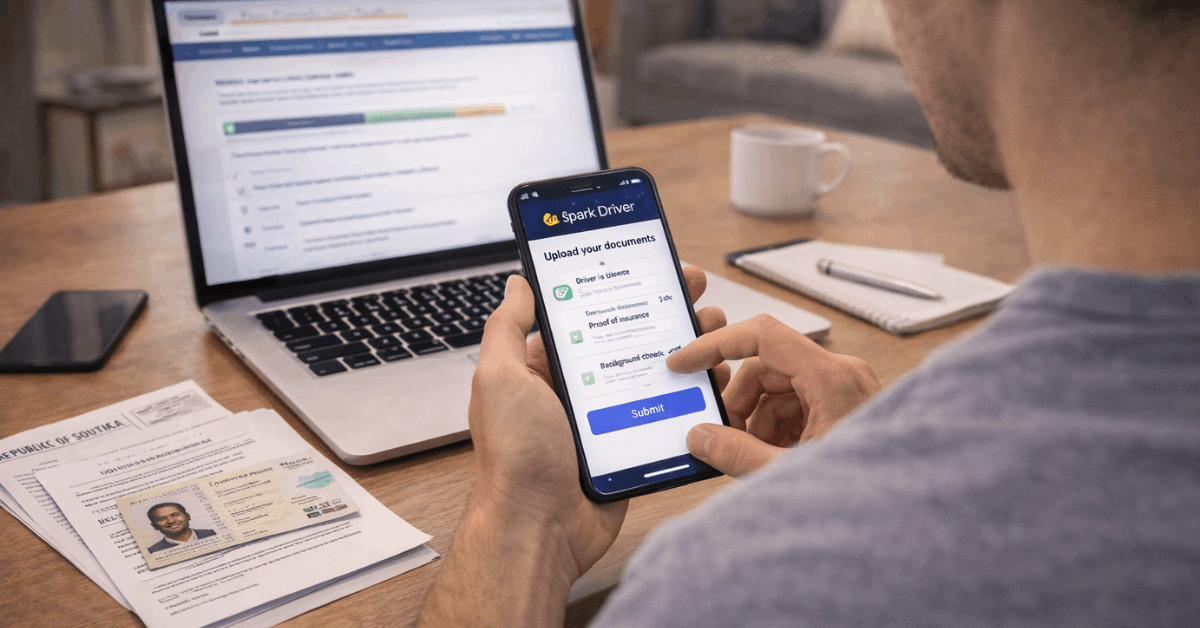
Signup flows request a real-time selfie for identity verification, a current driver’s license, and an auto insurance policy that lists your name, covered vehicle, and expiration date.
Keeping digital copies of policy declarations and updated cards shortens any future re-verification requests. Name mismatches between license and insurance create unnecessary review cycles, so verify alignment first.
Vehicle Standards
Eligible vehicles include cars, station wagons, SUVs, vans, and trucks. Bikes, scooters, and motorcycles are not permitted, since order sizes and transit distances often exceed two-wheel capacity.
No make, model, or year minimums appear in the rules; however, small vehicles naturally limit access to extra-large orders such as furniture. Clean interiors, secure cargo areas, and working climate control protect both goods and ratings.
Insurance Rules
Personal auto insurance meeting at least your state’s minimums is required. Some drivers consider a rideshare or delivery endorsement, or commercial coverage when local insurers advise it, especially in cities where contract delivery counts as business use.
Platform protection is not considered supplemental auto coverage, so the prudent approach is to confirm policy terms, track premiums, and save invoices for potential tax deductions at tax time.
Background Check
A background check with Checkr reviews criminal records and motor vehicle history. The screening usually completes within one to seven days after submitting consent, Social Security number, and license details.
Serious violations, recent suspensions, or certain convictions can disqualify an application based on applicable law and platform standards.
Step-By-Step Application Process
Getting to the first completed trip moves faster when preparation happens upfront. This short sequence consolidates enrollment into five clean steps and highlights small tasks that prevent rework. Expect minor differences by region, but the structure remains similar across most zones.
- Confirm Zone Availability And Start Enrollment.
Enter a ZIP code to check openings or a waitlist, create an account, and verify both email and phone. - Provide Identity And Work Details.
Submit name, address, Social Security number, and consent to background checks, then complete the live selfie. - Add Vehicle And Insurance.
Upload policy documents naming you as an insured driver and confirm the vehicle you intend to use for deliveries. - Choose An Earnings Account. Set up a deposit destination so completed trips flow into payouts without manual steps or delays.
- Finish Agreements And App Setup.
Accept final terms inside the Spark Driver app, enable location and camera permissions, and review offer settings.
How Earnings Work On Spark
Earnings combine base trip amounts, adjustments for complexity, and tips. Transparent factors help you pick trips that fit your vehicle, schedule, and distance preferences.
Sustainable results usually come from stacking multiple favorable factors rather than chasing a single large payout.
- Distance. Longer routes typically pay more, and multi-stop offers can increase total mileage and earnings.
- Size. Larger carts, cases of beverages, or bulk items often include higher pay to reflect time and effort.
- Extras. Flights of stairs, secure buildings, or heavy items can add compensation when noted in offers.
- Incentives. Zone promotions, peak-hour boosts, or batch bonuses appear in app messages and offer cards.
- Tips. Customers can add gratuities, and drivers keep 100 percent of confirmed customer tips.
Offer Types and What They Include
Many zones include core Walmart store pickups plus partner flows that expand beyond groceries.
Walmart GoLocal sends drivers to other retailers for items like hardware or flowers when local partnerships exist. A concise table below summarizes the common offer structures and the work each one involves.
| Offer Type | What You Do | Typical Sources |
| Delivery | Pick up staged orders and deliver to customer addresses. | Walmart stores and clubs |
| Shopping & Delivery | Shop a list in store, check substitutions, deliver to address. | In-store shopping for listed items |
| Returns | Pick up an item from a customer and bring it back. | Customer addresses to store returns |
| Dotcom | Deliver general merchandise for walmart.com orders. | E-commerce fulfillment to customer |
| Pharmacy | Handle prescriptions subject to local rules and ID checks. | Walmart or Sam’s Club pharmacies |
Tools and Costs To Plan For
Strong margins come from tracking costs as carefully as earnings. A mileage tracker app captures distance automatically and generates clean logs for taxes. Reliable smartphones handle barcode scanning, photo proof of delivery, and GPS navigation, so budgeting for a durable device and battery pack pays back quickly.
Data usage grows during navigation and photo uploads, which makes unlimited or high-cap plans attractive in busy months. Car rentals can work when your insurer allows listing the vehicle on a personal policy and the rental company permits business use.
Receipts for fuel, fluids, wiper blades, and phone mounts belong in a single folder to simplify filing. Simple cargo organization, like bins and straps, keeps items upright, reduces damage claims, and shortens door-to-door times.
Rewards and Perks For Drivers
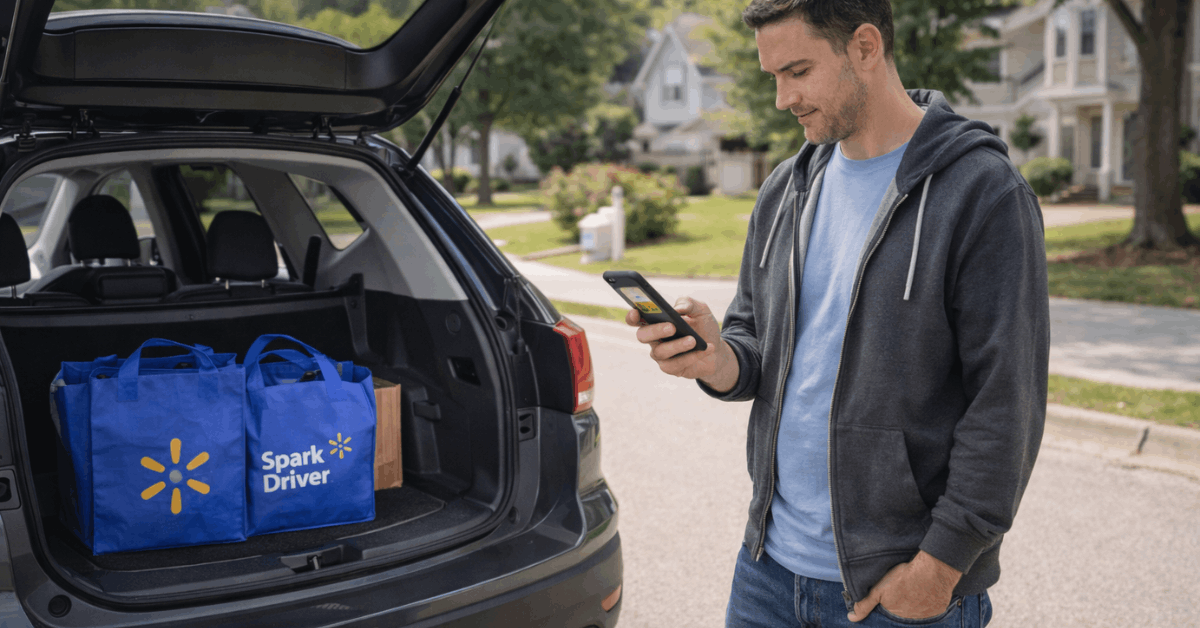
Program perks layer on top of trip earnings to reward consistency and good service. All drivers in good standing qualify for Tier 1 benefits, and Tier 2 requires at least twenty completed trips in a calendar month, plus a Green Customer Rating in My Metrics by the end of the month.
Qualifications can change, so check routine emails and in-app notices for updates. Same-day earnings become easier to manage through OnePay, which centralizes saving, spending, and payout tools in one place after approval.
Periodic promotions highlight tax support partners offering discounts for expense tracking and filing, helpful during quarterly estimates. Cellular deals advertise unlimited data and calling plans, and some equipment partners bundle dashcams and roadside assistance with introductory pricing.
Compliance, Safety, and Good Standing
Good standing rests on safe driving, accurate deliveries, and respectful customer interactions. Store staff expect smooth handoffs, accurate order numbers, and quick problem escalation through the app when a mismatch appears.
Apartment and gated building deliveries require attention to access instructions and photo documentation to avoid returns or reroutes. Lifting technique matters because orders can include cases of water or bulky pet food.
Proper loading prevents shifting and damage, and short pre-trip checks catch flat tires and dashboard warnings. Consistent use of seat belts, speed limits, and no-phone-in-hand policies protects both the public and your account.
FAQs For New Drivers
Clarity on common questions reduces trial-and-error during your first week. The answers below rely on current program language and standard independent-contractor practices.
Regional rules can differ, especially around pharmacy, ID verification, and insurance endorsements, so local compliance always wins. Support prompts inside the app handle most operational questions quickly.
- Can A Rented Car Be Used For Deliveries?
Yes, rented vehicles can be used when the rental agreement allows business use and your insurer permits listing that vehicle on your personal policy documents. Keep the agreement, insurance card, and storefully printed reservation details in the glove box for quick verifications. - Which Phones Work Best For The App?
Modern Android and iPhone devices that support GPS, reliable cameras, and the current operating system run the Spark Driver app effectively. Smoother scanning and faster photo uploads generally track with newer processors and sufficient storage. - How Are Tips Handled?
Tips belong to the driver after confirmation, separate from base and incentive pay. Clear communication, careful handling, and accurate substitutions tend to increase tipping rates over time. - What Disqualifies A Background Check?
Major recent driving violations, certain criminal convictions, or a suspended license can lead to adverse decisions. Screening providers reference motor vehicle records and criminal databases under applicable laws, and the platform communicates results through the app or email. - Are Bike Or Scooter Deliveries Allowed?
No, two-wheel vehicles do not meet current program rules for size, range, and safety. Compact cars can cover most small orders, while larger vehicles unlock furniture and bulk orders when available in your zone.
Last Thoughts
Early success often comes from choosing offers aligned to nearby neighborhoods during peak windows. Clean trunk space, labeled totes, and a small step stool reduce loading time and improve package integrity.
Ratings respond to punctuality, accurate photos, and quick replies through the in-app chat, so treat these touchpoints as part of the trip, not extras. Small habits compound into faster routes, lower costs, and stronger eligibility for promotions.