A banking rewards program sounds exciting on paper. Cash back, loyalty points, tiered perks. Then you actually read the terms.
If you bank with Komerční banka or are thinking about opening an account, the rewards system is real. The question is whether it works for you or for KB.



I think the gap between how banks describe their reward programs and how customers actually experience them is one of the most underexplored problems in Central European retail banking. And KB is a useful case study for exactly that reason.
How KB Actually Structures Its Rewards
Komerční banka runs several reward types across its product range. They do not all work the same way, and that distinction matters more than most people realize.
The three main categories look like this:
- Cashback on credit card spending, usually tied to categories like groceries, fuel, or travel
- Loyalty points, earned through bill payments, regular card transactions, or on-time loan repayments
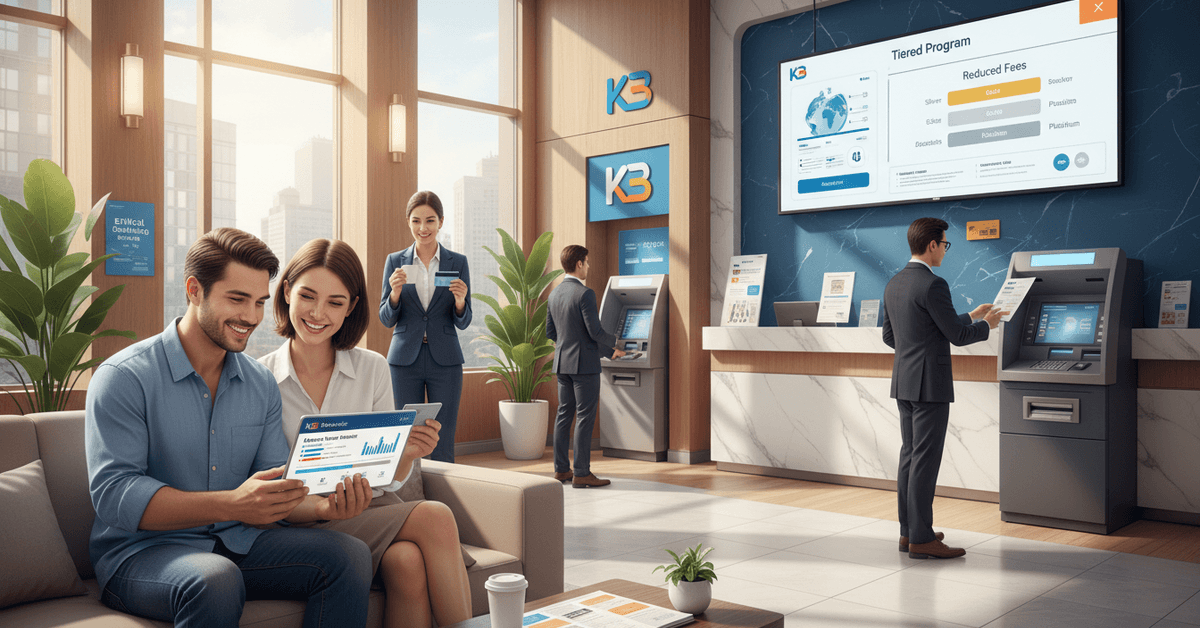
- Fee reductions and rate bonuses, embedded into bundled account packages or triggered by maintaining higher balances
Each one has a different logic. Cashback rewards your spending behavior. Points reward your engagement with KB's product ecosystem. Fee-based perks reward your financial stability.
That last category tends to get the least attention in product marketing. It is also, for many customers, where the real money lives.
Fee Structures and Rate Bonuses Are the Underrated Play
Spend three minutes reading about KB rewards online and you will find articles focused on credit card cashback. That is reasonable. Cashback is visible and easy to understand.
But I would argue that the fee-reduction tier is where KB's reward structure gets genuinely interesting, especially for customers who already keep a consistent balance across their accounts.

Customers using bundled banking packages can qualify for reduced monthly charges. Those who maintain higher balances may unlock elevated tier status with additional account management services attached.
These are not flashy perks. Over a year, though, fee savings add up in ways that a cashback percentage on groceries rarely does.
What "Tier Status" Actually Unlocks
Tier status at KB is not cosmetic. Elevated tiers can mean access to preferential saving interest rates, reduced charges, and tailored account services that standard-tier customers do not get.
The catch is that eligibility criteria vary. Specific transaction thresholds, minimum monthly activity requirements, or balance floors may apply depending on the product.
KB's documentation on these requirements has historically been clearer in branch materials than in digital summaries, which creates friction for anyone trying to plan ahead.
The Loyalty Points System and How to Drain Value From It
KB's loyalty program works through accumulated points. Customers earn points by paying utility bills through KB, using their card regularly, or making loan repayments on schedule.
Those points can then be exchanged for:
- Discounts on other KB products
- Shopping vouchers
- Exclusive partner deals
I was skeptical that a bank-run points program could compete with third-party rewards credit cards, and on raw earning rate, it probably cannot.
The value proposition is different. KB's points program rewards relationship depth, not spending volume. A customer who repays a loan on time and pays their electricity bill through KB earns points that a heavy-spending credit card user might not.
That framing matters. If you are using KB as your primary relationship bank and running most of your financial activity through their products, the points accumulate meaningfully.
If you are cherry-picking one product, the math likely does not work in your favor.
The Cashback Cap Problem Nobody Mentions
Cashback programs almost always include a cap. KB's credit card cashback operates the same way: specific categories, with rules and thresholds governing how much you can actually receive.
The cap is not a scandal. It is standard across European banking. What I genuinely disagree with is the widespread advice to focus on maximizing your cashback category spending.
That advice assumes you will actually hit the cap and that the cap is set generously enough to reward normal behavior.
For the average KB cardholder who is not spending aggressively in one specific category every month, optimizing for cashback ceilings is a distraction.
A better approach documented in consumer banking research focuses on whether the baseline earn rate on your regular spending adds up to anything useful at your actual transaction volume.
Digital Tools Are Doing More Than People Think
KB has built out its mobile and online banking platforms to show reward progress visually.
Dashboards track how close you are to reward thresholds. Some products include gamification elements: digital badges, streak tracking for regular logins, savings milestones.
I will admit I find gamified banking slightly odd. But it works. Research on behavioral finance suggests that visual progress indicators and small digital acknowledgments do change how consistently people engage with their accounts.
The practical outcome is that KB customers who use the mobile app regularly tend to stay more aware of their reward status and, as a result, more likely to take the small actions that actually trigger benefits.
Privacy and Personalization: The Trade-Off Worth Knowing
The more personalized a reward program gets, the more behavioral data it requires. KB's digital tools gather transaction patterns, login frequency, and product engagement data to power both the dashboards and any personalized prompts.
This is not unique to KB. Every bank running a data-driven loyalty program makes the same trade-off. What matters is whether the opt-in and data usage policies are readable by an actual human being, not just a compliance team.
Personalized rewards tied to life events, dynamic cashback categories, and AI-adjusted savings prompts are probably where KB's program is heading over the next few years.
Whether that is appealing depends on how comfortable you are with your bank knowing your spending patterns in detail.
Where KB's Reward Design Gets Ethically Interesting
There is a version of bank rewards that functions as a subtle incentive toward irresponsible behavior. Cashback on discretionary spending, points for high transaction volume, bonus rates for carrying a balance. KB's program is structured to avoid that pattern.
The triggers for most KB rewards lean toward positive financial behaviors: timely loan repayments earn points, maintaining a savings balance unlocks tier benefits, bill payment consistency builds rewards.
This matters for a specific type of customer: someone who wants to use a bank that is at least trying to reward good financial behavior rather than rewarding the behaviors that generate the most fee income for the bank.
The EU's open banking directives have increased regulatory scrutiny on how reward programs are disclosed across European banks, which means KB's terms are more readable than they were five years ago.
Questions People Ask About Komerční Banka Rewards
Q: Do KB loyalty points expire? Points expiration policies vary by product and promotion period. Check the specific terms on your current account or credit card documentation, since blanket points lifetime rules do not apply across all KB products uniformly.
Q: Can you combine cashback and loyalty points on the same account? Some KB bundled packages allow both, depending on which products you hold together. The interaction between cashback credit cards and the loyalty points program is worth confirming directly with KB, since stacking eligibility is not always clearly advertised.
Q: Is the tier system worth pursuing for an average-balance customer? For customers maintaining balances that already qualify for mid-tier status, yes. The fee reductions on bundled accounts can outperform cashback earnings for customers who are not heavy discretionary spenders.
Q: How does KB's reward program compare to other Czech banks? KB tends to prioritize stability over short-term promotional deals. That makes direct comparison difficult because competitor banks often run limited-time bonus structures that look more attractive on paper but do not hold up over a standard account lifecycle.
Q: Are there rewards for using KB's investment products? Some premium account tiers include benefits tied to holding investment instruments through KB's platform, though these are more common in higher-tier packages and less prominent in entry-level product documentation.
Conclusion
Komerční banka's rewards system works best when you treat it as a relationship structure, not a cashback machine.
The customers who extract real value are the ones using KB as their primary bank across multiple products. Chasing one isolated perk rarely produces results worth the attention.
The fee and rate benefits hidden inside bundled packages deserve a closer look than they typically get. If you are already a KB customer and have not reviewed your tier eligibility recently, that is the first place to start.